

Ideas into things —

Build. Explore. Figure it out.

I’m Aduneer, and I love learning. I build things to understand them, then keep refining what I make and how I think. Every project is a chance to get a little better.

55 AA// still curious

DRAG / TAP TO SPIN

Selected projects

A few things I’ve built

Inside each project A real preview, the decisions behind it, and a direct way to try it.

01 Error monitoring

Faultwing

Self-hosted error monitoring service built in Go. Explore project

Why it exists Catch bugs before they infest production.
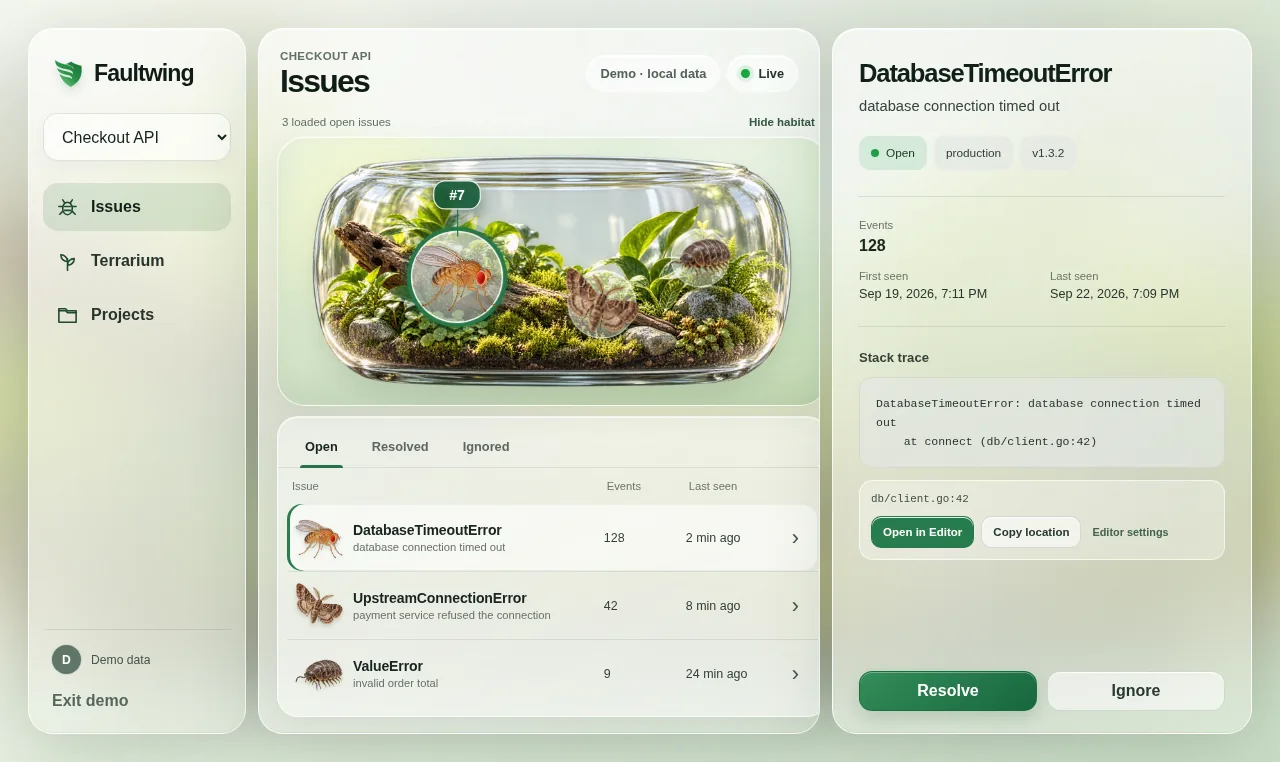
Faultwing dashboard with the issue terrarium, issue list, and selected error details
Faultwing’s local demo dashboard

From exception to issue

  1. 01App / SDK
  2. 02Go API
  3. 03Worker
  4. 04Issue
Built around
A Go API and worker, PostgreSQL, a React dashboard, and small Go, Python, and Node.js clients.
Includes
Error grouping, issue states, realtime dashboard refreshes, and stack-frame links for common editors.
Current scope
An early-stage learning project. The local workflow is complete; production deployment and security hardening are not.
02 Terminal learning

FlashTerm

A terminal study tool that makes you type the answer. Explore project

Why it exists No multiple choice and no self-grading: produce the answer, or keep working on it.

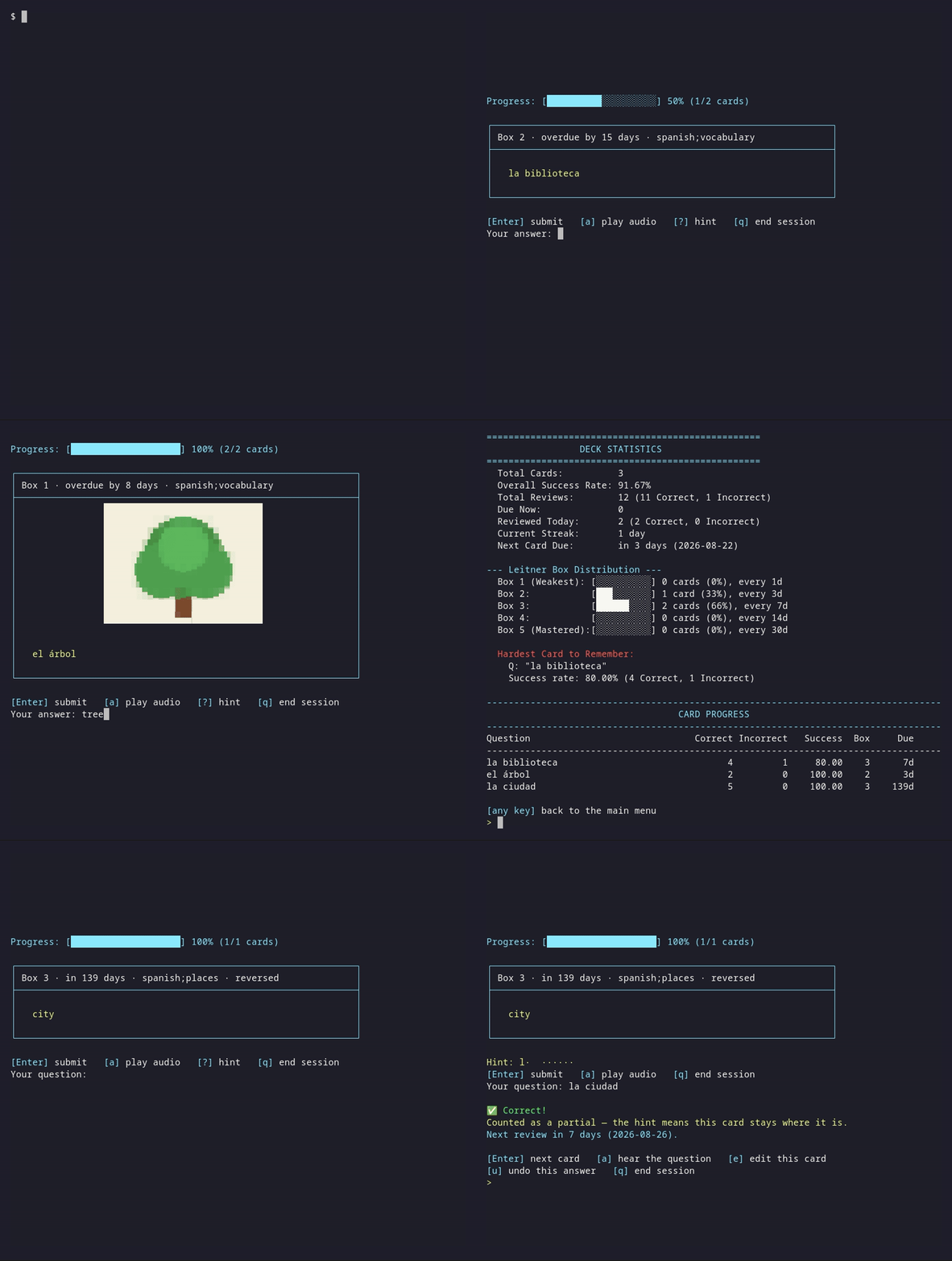
FlashTerm review showing a Spanish vocabulary card, typed answer, and correct result
A real review session · click to watch the demo

Five-box review schedule

  1. Box 11 day
  2. Box 23 days
  3. Box 37 days
  4. Box 414 days
  5. Box 530 days
Built around
A C++17 terminal application using plain-text decks and no third-party dependencies.
Includes
Leitner scheduling, reverse review, typo tolerance, hints, undo, tags, and progress statistics.
Deck format
Custom CSV decks, cloze deletion, and optional image or audio support without a required service account.
03 Early experiment

Fugazi

A tiny language model that borrows the rhythm of a text corpus, one word at a time. Explore project

Why it exists An early step into AI and ML: seeing what a small, understandable text model can generate.

$ python -m fugazi --seed 1 --sentences 3
We built a platform. Platforms are wonderful because they can do anything.
Excerpt from a reproducible run on the bundled sample corpus

From corpus to sentence

  1. 01Corpus
  2. 02Tokens
  3. 03Contexts
  4. 04Next word
Mechanism
A word-level Markov chain that samples from the words observed after each context in the corpus.
Includes
Seeded repeatable runs, a cache keyed to corpus metadata, and clear errors for unusable input.
Scope
A classical n-gram experiment that runs on Python's standard library, with its limitations documented.

Field notes

Decisions behind the demos

From question
to working system.

01 / Faultwing

Let the worker do the grouping.

An incoming exception becomes a durable PostgreSQL job. A Go worker fingerprints and groups it into an issue; workers can claim jobs concurrently with FOR UPDATE SKIP LOCKED. The dashboard refreshes from the authoritative API.

Read the architecture (opens in a new tab)
02 / Fugazi

The chain remembers only its previous words.

Fugazi counts what follows each short context, then samples a path through those transitions. Starting at sentence openings and fixing the random seed make the output easier to read and reproduce. It was one of the experiments that drew me into language modeling.

Read how it works (opens in a new tab)
Open signal cache 640 × 480 / 16 colors

build / learn / repeat

A small nod to Terry A. Davis and the handmade world of TempleOS (opens in a new tab).

the pixels glow in the dark

Aduneer's robot avatar

About / ongoing

Curious about how things work.

I love learning, and building is how I make it stick. I try things, break them, understand why, and make the next version better.

Right now I’m exploring Go, C++, Python, data, AI, and systems. Side paths keep leading to tiny VMs, emulation, Linux from source, unusual networks, and old laptops with character.